Choosing the China Best Pet Jar Supplier for Global Buyers? The decision requires more than comparing unit prices. A reliable supplier must control resin quality, mould precision, closure fit, factory hygiene, and shipment consistency. A clear audit trail matters.
Smithers’ report, The Future of PET Packaging to 2028, highlights lightweighting, recycled content, and improved recycling systems as major packaging forces. The report also signals a practical challenge: lighter containers can lose stiffness if design testing is weak. This matters when jars hold creams, supplements, sauces, or household products. A sample should survive stacking, vibration, temperature changes, and repeated opening.
Grand View Research describes growing demand for PET packaging because of its clarity, strength, light weight, and design flexibility. Yet market growth does not prove supplier reliability. That assumption needs questioning. A polished catalogue can hide inconsistent neck dimensions or uneven wall thickness.
Simon Ellin, former chief executive of The Recycling Association, offers a useful principle: “There is no such thing as waste, only resources in the wrong place.” His view supports a broader Pet Jar assessment. Buyers should ask about recycled PET availability, material traceability, label compatibility, and post-consumer recycling conditions. They should also verify food-contact or cosmetic-packaging documentation through qualified testing bodies.
The strongest Chinese supplier is not always the cheapest. It is the one that documents its process, communicates production risks, and corrects defects without delay. Factory visits help. Independent inspections help more. Small details often decide global performance: a clean rim, a secure cap, and cartons that arrive dry.
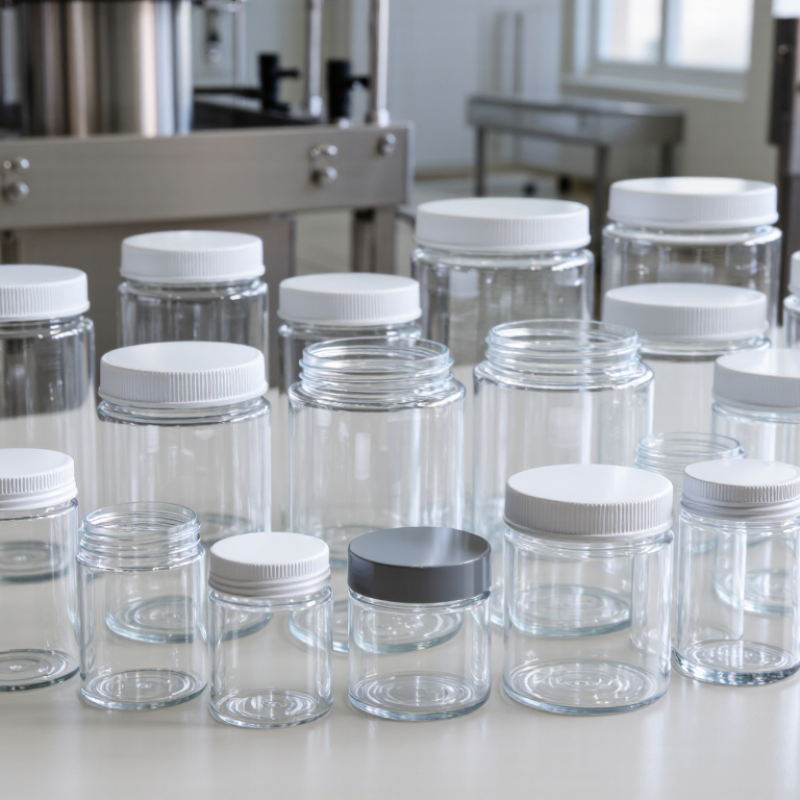
China has become a leading PET jar supplier because its packaging ecosystem is unusually complete. Resin producers, mold workshops, injection factories, decorators, and logistics teams often operate within one sourcing network. UN Comtrade data consistently ranks China among the largest exporters of plastic packaging articles, including containers and jars. This scale supports competitive pricing, flexible order quantities, and faster mold development.
The advantage is practical. A buyer can request a 250-milliliter jar, a wide neck, a ribbed grip, or a custom amber color from the same production region. Modern factories commonly use automated preform inspection, weight checks, torque testing, and drop testing. These steps matter when jars travel thousands of kilometers. Smithers’ report, The Future of PET Packaging to 2029, highlights lightweighting, recyclability, and recycled content as major PET packaging drivers. Chinese suppliers are responding with thinner walls, clearer material specifications, and improved production controls.
Still, the cheapest quotation is not always the best decision. Supplier quality can vary sharply. Some factories provide excellent samples but weaker mass production. Buyers should review batch records, food-contact documentation, dimensional tolerances, and third-party inspection results. A useful audit examines the warehouse floor, not only the polished catalog. China offers strong manufacturing depth, but careful verification remains essential. That part is easy to underestimate.
China Best Pet Jar Supplier for Global Buyers?
PET jars vary by shape, neck finish, wall thickness, and closure system. Wide-mouth jars suit powders, capsules, creams, and dry foods. Narrow-mouth designs reduce exposure during pouring. Clear PET improves shelf visibility, while amber or opaque PET helps protect light-sensitive contents. Recycled PET can reduce virgin resin demand, but its color and consistency require careful inspection.
Material selection affects real performance. Virgin PET offers stable clarity, impact resistance, and food-contact suitability when properly tested. Post-consumer recycled PET supports circular packaging goals, although supply quality can fluctuate. The OECD reported that global plastic waste reached 353 million tonnes in 2019. Packaging represented about 40% of plastic use, according to the same report. These figures make resin efficiency more than a marketing detail.
Common applications include nutritional powders, personal-care creams, household products, and laboratory materials. Global buyers should request migration tests, closure torque data, drop-test results, and dimensional tolerances. A reliable supplier should also provide batch traceability and production samples. In practice, a jar may look perfect but fail after repeated opening. That mistake is easy to miss. The Plastics Industry Association reported a U.S. PET bottle recycling rate of 29.1% in 2022, showing why recyclability claims need evidence. Buyers should verify recycled content, test methods, and destination-market requirements before approving mass production.
| PET Jar Type | Primary Material | Typical Appearance | Common Capacity Range | Typical Neck and Closure | Key Advantages | Common Applications | Important Buyer Considerations |
|---|---|---|---|---|---|---|---|
| Wide-Mouth PET Jar | Virgin PET; rPET may be available depending on the required color, food-contact status, and recycled-content target. | Usually clear, translucent, or colored. Clear PET provides strong product visibility. | Approximately 100 ml to 2,000 ml, with larger sizes available for selected packaging formats. | Wide threaded neck with a screw cap, often using a liner or induction-compatible sealing system. | Easy filling, dispensing, and access to powders, tablets, snacks, and solid products. Good shelf visibility and impact resistance. | Food supplements, confectionery, snacks, dry foods, cosmetics, personal-care products, and household items. | Check opening diameter, cap fit, inner liner, tamper evidence, product-contact compliance, and required barrier performance. |
| Round PET Jar | Polyethylene terephthalate (PET), commonly produced through injection stretch blow molding or related PET forming processes. | Clear, glossy, and smoothly rounded with a conventional cylindrical profile. | Approximately 50 ml to 1,500 ml. | Standard screw neck with plastic closure; closure dimensions must match the jar finish. | Efficient use of transparent packaging, smooth label application, and good resistance to breakage compared with glass. | Vitamins, nutritional powders, candies, dry ingredients, beauty products, and small consumer goods. | Review label panel dimensions, stacking stability, wall thickness, jar weight, and compatibility with automated filling lines. |
| Square or Rectangular PET Jar | Virgin PET or recycled-content PET where appearance and regulatory requirements permit. | Clear or tinted with flat panels and defined corners. | Approximately 100 ml to 2,000 ml. | Threaded neck with a screw cap; some formats support tamper-evident closures. | Flat surfaces provide a large branding and information area. The shape can improve carton packing and shelf utilization. | Food ingredients, supplement powders, cosmetics, personal-care products, and specialty household products. | Test corner strength, panel distortion, cap alignment, pallet efficiency, and performance during transport and drop testing. |
| Tablet and Capsule PET Jar | Food- or pharmaceutical-contact grade PET, selected according to the product and destination-market regulations. | Usually clear, amber, white, or opaque to support product presentation and light protection requirements. | Approximately 30 ml to 1,000 ml. | Usually a threaded neck with a child-resistant closure, tamper-evident cap, induction seal, or combination of these features. | Lightweight, shatter-resistant, dimensionally stable, and suitable for high-speed filling and capping. | Tablets, capsules, gummies, soft gels, and other solid nutritional or healthcare products. | Confirm child-resistance requirements, seal integrity, desiccant compatibility, oxygen and moisture sensitivity, and applicable labeling rules. |
| Powder PET Jar | PET body with a wide opening; material selection depends on food-contact, cosmetic, or other regulatory requirements. | Clear, translucent, white, or custom-colored. | Approximately 200 ml to 2,000 ml. | Wide-mouth threaded finish with a screw cap, liner, sifter, measuring scoop, or induction seal. | Convenient powder access, good visibility, low weight, and resistance to normal handling impacts. | Protein powders, nutrition powders, baking ingredients, spices, drink mixes, and cosmetic powders. | Evaluate moisture protection, powder flow, scoop storage, headspace, seal performance, and compatibility with filling equipment. |
| Cosmetic PET Jar | Virgin PET is commonly used for high clarity; colored or opaque PET can be selected for appearance and light protection. | Glossy clear, frosted, translucent, opaque, or tinted. | Approximately 15 ml to 500 ml. | Screw cap, disc-top, treatment pump, or specialty closure depending on the dispensing design. | Attractive appearance, good transparency, low breakage risk, and compatibility with many personal-care formulations. | Body scrubs, bath salts, hair-care products, cleansing products, creams, and personal-care powders. | Conduct compatibility testing with oils, alcohols, fragrances, surfactants, and preservatives before mass production. |
| Light-Protective PET Jar | Colored or opaque PET; colorants and additives must be suitable for the intended regulatory and product-contact requirements. | Amber, white, opaque, or other tinted colors that reduce visible-light transmission. | Approximately 50 ml to 1,500 ml. | Threaded neck with a standard screw cap, tamper-evident closure, or induction-seal option. | Can reduce exposure to visible light while maintaining PET’s lightweight and shatter-resistant characteristics. | Light-sensitive supplements, certain cosmetic formulas, personal-care products, and selected food ingredients. | Request measured light-transmission data for the relevant wavelength range; color alone does not guarantee complete light protection. |
| Recycled-Content PET Jar | rPET blended with or used alongside virgin PET. The percentage and source of recycled content vary by specification. | May be clear, slightly tinted, grayish, or colored depending on the recycled resin and processing method. | Available across many common jar capacities. | Uses the same general threaded-neck and closure systems as comparable PET jars. | Can help reduce reliance on virgin resin and support recycled-content targets when suitable material is available. | Food and beverage-related dry goods, supplements, cosmetics, personal-care products, and household products, subject to regulatory approval. | Confirm recycled-content percentage, traceability, color consistency, odor, migration compliance, mechanical performance, and local recycling requirements. |
| Hot-Fill or Higher-Temperature PET Jar | Heat-set or specially designed PET formulation and process, when the application requires elevated filling or handling temperatures. | Clear or colored, depending on the product and light-protection needs. | Commonly used in selected medium-capacity formats; exact range depends on the design and process. | Threaded neck with a closure selected for thermal and sealing performance. | May provide improved dimensional stability compared with standard PET under specified temperature conditions. | Selected food, sauce, puree, and other products requiring controlled warm filling or thermal handling. | Confirm maximum filling temperature, cooling method, vacuum behavior, panel design, closure performance, and validated shelf-life conditions. |
| Decorated or Custom-Color PET Jar | PET with masterbatch coloring, surface coating, in-mold decoration, pressure-sensitive labeling, or shrink-sleeve decoration. | Clear, tinted, opaque, metallic-look, frosted, or printed. | Available in many standard and custom capacities. | Closure and neck finish are selected according to the jar structure and dispensing requirements. | Supports product differentiation, color coding, and enhanced shelf presentation without changing the basic PET container structure. | Cosmetics, supplements, confectionery, specialty foods, personal-care products, and household products. | Review color tolerances, decoration adhesion, scuff resistance, recyclability, artwork specifications, minimum order quantity, and sampling requirements. |
Buyer note: Capacity ranges, neck finishes, closure systems, wall thickness, recycled content, color, and regulatory suitability vary by jar design and target market. Before placing a production order, request technical drawings, material declarations, sample testing, seal-performance data, and product-compatibility results.
Choosing a Chinese PET jar manufacturer requires more than comparing quotations. Start with the material specification: resin grade, recycled content, wall thickness, neck finish, and closure fit. Ask for production samples from regular batches, not only polished showroom pieces. Inspect clarity, weight consistency, flash, scratches, and sealing performance. Small details matter. A jar that looks acceptable may still leak after transport.
Request factory records for incoming resin checks, mold maintenance, in-process inspections, and final sampling. Reliable suppliers can explain equipment, monthly capacity, lead times, and defective unit handling. Ask for evidence. Independent laboratory tests can verify dimensions, drop resistance, chemical compatibility, and food-contact suitability when relevant. Keep test methods written and comparable. Vague promises are not enough. Review traceability carefully. Each shipment should connect to a batch, operator, inspection result, and packing date. This helps identify problems before they spread across inventory.
Communication also reveals manufacturing discipline. Ask how engineering changes, color adjustments, and urgent quality issues are documented. A responsive team is useful, but speed should not replace controlled approval. Check export experience and product documents for your destination market. Do not assume one certificate covers every application. That assumption can become expensive. A site audit is valuable, yet it has limits. One visit cannot prove twelve months of consistency. Combine it with trial orders, retained samples, and periodic inspections. I would leave room for doubt, because even careful suppliers can miss a defect. The stronger choice is a manufacturer that reports the miss, investigates its cause, and prevents a repeat.
Global buyers need more than a low quotation when choosing a China PET jar supplier. Production discipline, documented testing, and export readiness matter at every shipment. PlasticsEurope reported 413.8 million tonnes of global plastics production in 2023. That scale increases supply options, but it also makes traceability essential. Ask for resin specifications, mold records, batch codes, and retained samples. Food-contact jars should match the destination market’s rules, not assumptions. Relevant evidence may include migration testing, declarations, and material certificates.
Quality control should begin before molding. Inspect incoming resin, moisture levels, preform weight, wall thickness, neck dimensions, and torque. Use calibrated gauges and record results by batch. Drop tests, leak tests, visual checks, and closure compatibility reveal practical defects. ISO’s 2023 Survey lists more than 1.26 million ISO 9001 certificates worldwide. However, certification shows a management system, not automatic product perfection. Export compliance also requires accurate packing lists, invoices, labeling, and tariff classification. Requirements can change. One overlooked document can delay a container. Do not rely on an old supplier report. Request current reports from an accredited laboratory.
Tips: Confirm the target country before sampling. Compare three production batches, not one attractive sample. Check pallet photos, carton strength, and humidity protection. Keep a signed specification sheet. Small gaps become expensive.
China remains a practical sourcing base for PET jar buyers, but the lowest quote is rarely the lowest landed cost. PET resin prices change with oil markets, order volume, color, wall thickness, and neck finish. Ask suppliers to separate resin, molding, decoration, caps, cartons, and tooling fees. This makes negotiation clearer. A 500-gram jar with a wide mouth may need stronger walls and more protective packaging. That detail affects cost quickly.
Customization should begin with the product itself, not only the logo. Confirm jar dimensions, closure compatibility, transparency, UV protection, label area, and food-contact documentation. The OECD Global Plastics Outlook reports that packaging creates about 40% of global plastic waste. Lightweight designs can reduce material use, but excessive thinning may cause deformation during filling or transport. That trade-off is easy to underestimate. Request samples, dimensional reports, and batch-level certificates before approval.
Logistics also changes supplier value. UNCTAD reports that ships carry over 80% of global merchandise trade by volume, so port selection and shipping schedules matter. Compare EXW, FOB, and DDP quotations carefully, including inland trucking, customs handling, insurance, and destination charges. Supplier audits should review quality controls, mold maintenance, production capacity, and corrective-action records. A qualified supplier should provide inspection evidence, not just polished photographs. I would also test a pilot shipment; one successful sample cannot represent every production batch.
Confirm resin grade, recycled content, wall thickness, neck finish, and closure fit. Request a signed specification sheet. Small gaps matter.
Showroom samples may hide production variation. Compare jars from three regular batches for clarity, weight, scratches, flash, and sealing. One attractive sample proves little.
Ask for incoming resin checks, mold maintenance records, in-process inspections, and final sampling results. Records should identify the batch, operator, inspection result, and packing date. Paperwork alone is not proof.
Use dimensional checks, drop tests, leak tests, and closure compatibility tests. Independent laboratory testing can assess chemical compatibility and suitable contact applications. Keep every test method written and comparable.
Combine a site audit with pilot orders, retained samples, and periodic inspections. Inspect pallet photos, carton strength, humidity protection, and batch records. One factory visit cannot prove twelve months of consistency.
Confirm packing lists, invoices, labels, and tariff classifications for the destination market. Request current laboratory reports and relevant material declarations. Do not assume one certificate covers every application.
Ask suppliers to separate resin, molding, decoration, closures, cartons, tooling, and transport fees. Confirm dimensions, transparency, UV protection, label area, and closure compatibility. The lowest quote may not be the lowest landed cost.
The supplier should document the missed defect, investigate its cause, and prevent repetition. A responsive team helps, but speed must not replace controlled approval. I would still keep some doubt.
China has become a major sourcing destination for global buyers seeking reliable Pet Jar solutions because of its broad manufacturing capacity, flexible production capabilities, and competitive pricing. Chinese suppliers can provide various jar shapes, sizes, neck finishes, colors, and material options for applications such as food packaging, cosmetics, household products, and personal care. Buyers should evaluate manufacturers based on production experience, material transparency, mold development ability, communication efficiency, and consistency in delivering customized orders.
A dependable Chinese Pet Jar manufacturer should maintain clear quality-control procedures, conduct inspections throughout production, and support appropriate export documentation and packaging standards. Important purchasing factors include unit pricing, minimum order quantities, customization costs, lead times, logistics arrangements, and after-sales communication. By comparing suppliers carefully and confirming samples, specifications, testing records, and shipping terms before placing an order, global buyers can reduce sourcing risks and establish a more stable, efficient, and long-term packaging supply relationship.
